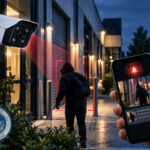
Wireless security cameras have become one of the most popular ways to protect homes and businesses. They are easy to install, they send alerts straight to your phone, and they let you check on your property from anywhere. But Canadian winters are not easy on anything — not on cars, not on roads and certainly not on outdoor electronics.
So, are wireless security cameras reliable in Canadian winters? The short answer is yes — if you choose the right equipment and install it correctly. The wrong camera, mounted in the wrong spot, can leave you with dead batteries, blurry footage and missed alerts right when you need it most. In this guide, we break down how cold weather affects wireless cameras and what to look for to make sure yours keep working from November to April.
First: What Does “Wireless” Really Mean?
The word “wireless” is used for two different things, and it is important to understand the difference:
- Wi-Fi cameras send video wirelessly to your router, but they still plug into a power outlet.
- Battery-powered (wire-free) cameras run entirely on batteries and send video over Wi-Fi.
Both types can work in winter, but they face different challenges. Battery-powered cameras are most affected by the cold, while Wi-Fi cameras that are plugged in are mostly affected by signal strength and weather exposure.
How Cold Weather Affects Wireless Cameras
1. Battery drain in freezing temperatures
Batteries do not like the cold. Lithium-ion batteries, which power most wire-free cameras, lose capacity as temperatures drop. A battery that lasts months in the summer may need recharging much more often in January. On top of that, many rechargeable lithium-ion batteries should not be charged below freezing, and some cameras will refuse to charge at all until they warm up. Solar panels help, but short winter days and snow-covered panels limit how much charge they can provide.
2. Operating temperature limits
Every camera has an operating temperature range listed in its specifications. Some consumer cameras are only rated to around -20°C. That may sound cold enough, but parts of Ontario and much of Canada regularly see temperatures colder than that, especially with wind chill. When a camera falls below its rated range, it may shut down, freeze up or behave unpredictably. For Canadian installations, it is worth choosing cameras rated for -30°C or lower.
3. Snow, ice and frost on the lens
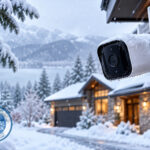
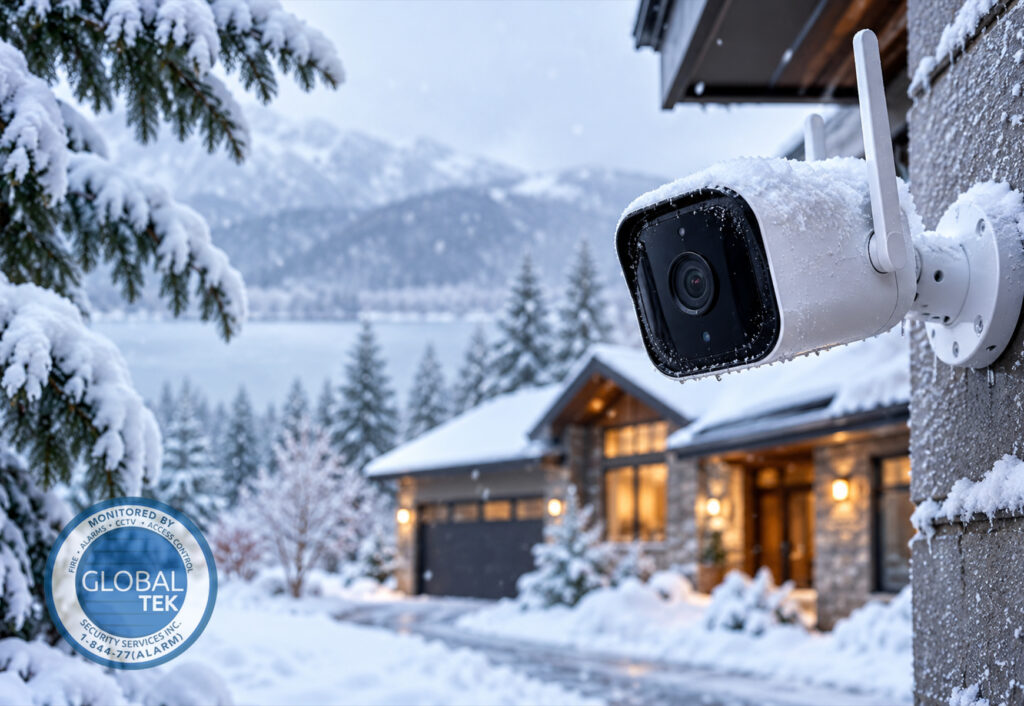
A camera is only as good as what it can see. Snow buildup, freezing rain and frost can cover the lens and leave you with a white or blurry image. Cameras mounted under eaves, soffits or overhangs are much better protected than those mounted on open walls or posts.
4. Condensation and moisture
When cameras go through repeated freeze-thaw cycles, moisture can form inside poorly sealed housings. This can fog the lens or even damage internal parts. Look for cameras with an IP66 or IP67 weatherproof rating, which means they are sealed against dust and water.
5. Night vision glare from falling snow
Most cameras use infrared (IR) lights for night vision. When snow is falling, those IR lights reflect off the snowflakes and can create glare or bright spots in your footage. This can also trigger false motion alerts. Adding outdoor lighting and positioning cameras carefully can reduce this problem.
6. Wi-Fi signal strength
Wi-Fi signals weaken when they travel through brick, stone, insulation and exterior walls. In winter, people keep doors and windows closed, and cameras mounted on detached garages or far corners of a property may lose connection. A weak signal means delayed alerts, choppy video or missed recordings.
7. False alerts from snow and wind
Blowing snow, swaying branches with ice on them, and headlights reflecting off snowbanks can all trigger motion detection. Too many false alerts lead people to ignore their notifications — which defeats the purpose of having cameras at all.
Wired vs. Wireless: Which Is Better for Canadian Winters?
Wireless cameras offer convenience, but for many properties, wired IP cameras are the more dependable choice in harsh climates. Power-over-Ethernet (PoE) cameras receive both power and data through a single cable, so there are no batteries to drain and no Wi-Fi signal to lose. They also record continuously to a video recorder, so you have footage even if your internet goes down.
That does not mean wireless cameras are a bad option. They are a great fit for:
- Areas where running cable is difficult or costly
- Renters who cannot drill through walls
- Temporary coverage, such as cottages or construction areas
- Adding coverage to an existing wired system
Many of the best systems use a combination — wired cameras for critical areas like entrances, driveways and loading docks, and wireless cameras where flexibility matters. GlobalTek Security designs home security camera and commercial security camera systems around your property and the conditions it actually faces.
How to Make Wireless Cameras Winter-Ready
If you already have wireless cameras or plan to install them, these steps will help them perform through the coldest months:
- Check the temperature rating. Choose cameras built for Canadian winters, not just mild climates.
- Mount cameras under cover. Eaves and overhangs protect the lens from snow and ice.
- Use plug-in power where possible. Wired power eliminates cold-weather battery problems.
- Keep spare batteries indoors. If you use battery cameras, rotate charged batteries kept at room temperature.
- Strengthen your Wi-Fi. A mesh Wi-Fi system or outdoor access point can improve signal to far-away cameras.
- Adjust motion zones and sensitivity. Exclude busy roads, trees and snowbanks from detection zones.
- Turn on person and vehicle detection. Smart detection filters out snow, wind and animals, reducing false alerts.
- Add exterior lighting. Good lighting improves image quality and reduces IR glare during snowfall.
- Clean the lens after storms. A quick wipe after heavy snow or freezing rain keeps your view clear.
- Check your cameras regularly. Open your app once a week to confirm every camera is online and recording.
Why Professional Installation Makes a Difference
Many winter camera problems come down to installation. A camera mounted at the wrong angle, too far from the router, or fully exposed to the weather will struggle no matter how good it is. Professional installers consider sight lines, lighting, weather exposure, signal strength and power — so your cameras work in every season.
Cameras become even more powerful when they are connected to professional monitoring. With verified video alarm monitoring, operators can see what triggered an alarm and dispatch help faster when a real threat is confirmed.
Frequently Asked Questions
Do wireless security cameras work in -30°C weather?
Some do, but many consumer cameras are not rated that low. Always check the operating temperature range before buying, and choose models designed for extreme cold.
Why does my battery camera die so fast in winter?
Cold temperatures reduce battery capacity, and cameras often record more in winter due to snow and wind triggering motion. Plug-in power or a solar panel can help.
Can snow block my security camera?
Yes. Snow, ice and frost can cover the lens. Mounting cameras under eaves or overhangs gives them the best protection.
Are wired cameras better than wireless cameras in Canada?
Wired PoE cameras are generally more reliable in extreme weather because they do not rely on batteries or Wi-Fi. Many properties benefit from a mix of both.
Get Cameras That Work All Winter Long
Your security should not take the winter off. Whether you need weather-ready wireless cameras, a wired IP camera system, or a mix of both, GlobalTek Security will design a system that performs in real Canadian conditions.
Call +1-905-928-8564 or +1-844-772-5276, email info@globalteksecurity.ca, or request a free quote today.