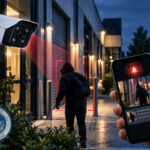
For most businesses, the biggest security risk does not happen during business hours. It happens at 2:00 AM, when the lights are off, the staff have gone home and nobody is watching. Traditional security cameras record what happens — but they often only help after the damage is done. You review the footage the next morning, file a police report and hope for the best.
Motion-triggered video alerts change that. Instead of simply recording, your cameras actively watch for activity and send alerts — with video — the moment something happens. In this article, we explain how motion-triggered video alerts work, why they are so effective for commercial properties, and how they can help your business respond faster, reduce false alarms and protect what you have built.
What Are Motion-Triggered Video Alerts?
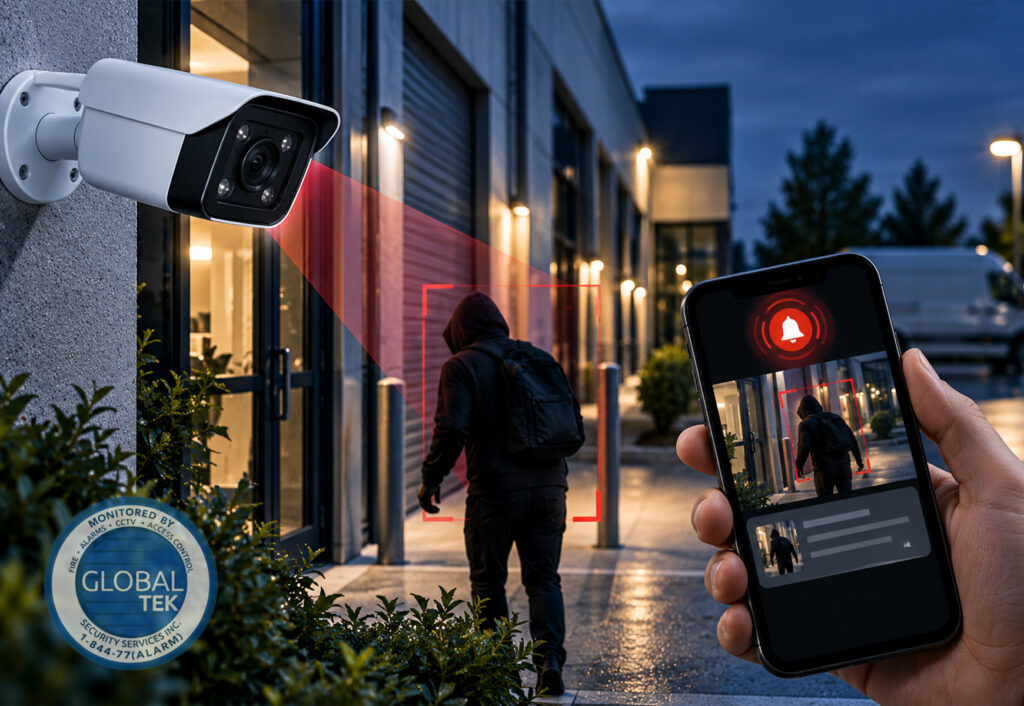
A motion-triggered video alert is a notification sent by a security camera or alarm system when it detects movement in a defined area. Instead of a plain alarm signal that only says “Zone 4 triggered,” you — or a professional monitoring operator — receive a short video clip or live view showing exactly what caused the alert.
Modern systems go well beyond basic motion detection. With video analytics, cameras can tell the difference between:
- A person walking across your parking lot
- A vehicle pulling into your loading area
- An animal, a moving shadow or a blowing tree branch
That means you are alerted to the activity that actually matters, not every leaf that moves.
The Problem With Traditional Alarms
Traditional alarm systems are built around sensors — door contacts, motion detectors and glass-break sensors. When one is triggered, the monitoring station receives a signal. But the operator has no way of knowing whether it is a break-in, an employee who forgot the code, or a balloon drifting past a motion detector.
This creates two major problems:
- False alarms are common. A large share of alarm signals turn out to be false, caused by user error, pets, faulty equipment or environmental factors.
- Unverified alarms may get a slower response. Because police services receive so many false alarms, many give higher priority to alarms where a crime in progress has been confirmed. An unverified alarm may wait while other calls are handled.
Many municipalities and police services also charge fees for repeated false alarms, which adds cost and frustration for business owners.
How Motion-Triggered Video Alerts Improve Commercial Security
1. Faster, verified response
When an alarm is backed by video, a monitoring operator can see what is happening in real time. If an intruder is confirmed, the operator can tell police that there is a verified crime in progress — not just an alarm signal. This often leads to a faster, higher-priority response. GlobalTek Security’s Verified Video Alarm Monitoring is built for exactly this purpose.
2. Fewer false alarms and lower costs
If a motion alert turns out to be a raccoon, a cleaner or a manager who stopped by after hours, the operator can see that immediately and avoid an unnecessary dispatch. Fewer false dispatches means fewer fines, fewer wasted trips and a better relationship with local police.
3. Real-time awareness from anywhere
Business owners and managers can receive alerts on their phones, view live video and decide what to do next — whether that is calling the monitoring station, contacting a key holder or simply confirming that a late delivery has arrived. You are no longer in the dark about what is happening at your property.
4. Deterrence before damage
Many systems can be paired with audio talk-down speakers, sirens or lights. When an intruder is detected, an operator can speak through a speaker and let them know they are being watched and police are on the way. In many cases, this stops a crime before any damage is done.
5. Stronger evidence
Motion-triggered recordings are organized by event, making it much easier to find the exact clip you need. Clear, time-stamped footage helps police investigations, insurance claims and internal reviews.
6. Monitoring of specific high-risk areas
Video analytics let you create custom detection zones and schedules. For example, you can set alerts for:
- Loading docks and back doors after closing
- Parking lots where vehicles should not be overnight
- Fenced yards and storage areas with equipment or inventory
- Cash rooms, server rooms and stock rooms
- Perimeter fences to catch intruders before they reach the building
7. Better management of daily operations
Video alerts are not only about crime. Businesses also use them to monitor after-hours access, confirm when staff open and close, check on deliveries, and review safety incidents. Combined with access control, you get a full picture of who entered your building and when.
Which Businesses Benefit Most?
Motion-triggered video alerts are valuable for nearly every commercial property, but they are especially useful for:
- Retail stores and shopping plazas
- Warehouses and distribution centres
- Construction sites with expensive equipment
- Car dealerships and auto repair shops
- Restaurants and franchise locations
- Offices and multi-tenant buildings
- Pharmacies, jewellery stores and other high-value retailers
- Multi-location businesses that need central oversight
For high-risk retailers, video alerts can be combined with security fogging systems that activate when a break-in is confirmed. Learn more about our fog detection devices.
Tips for Getting the Most From Video Alerts
- Place cameras strategically. Cover entrances, exits, perimeters and high-value areas — not just the front door.
- Use smart analytics. Person and vehicle detection dramatically reduces false alerts.
- Set clear schedules. Arm video alerts after hours so staff are not constantly triggering them.
- Define detection zones carefully. Exclude public sidewalks, roads and trees where possible.
- Invest in good lighting. Better lighting means clearer video and more accurate detection.
- Keep contact lists updated. Make sure the monitoring station knows who to call and in what order.
- Work with a professional provider. Professional design and monitoring ensure your system works when it counts.
Frequently Asked Questions
What is the difference between motion detection and video verification?
Motion detection simply senses movement. Video verification lets an operator see the cause of an alarm and confirm whether it is a real threat before dispatching help.
Do motion-triggered alerts reduce false alarms?
Yes. Smart analytics filter out animals, shadows and weather, and video lets operators confirm alarms before dispatching police.
Can I receive video alerts on my phone?
Yes. Most modern commercial camera systems send alerts and video clips directly to your smartphone, so you can check your property from anywhere.
Will police respond faster to a verified alarm?
Verified alarms often receive higher priority because police know a crime is in progress, though response times always depend on local conditions.
Protect Your Business Around the Clock
GlobalTek Security designs business security systems that do more than record — they detect, verify and respond. With rapid response dispatch, video verification and systems built around your property, your business is protected even when no one is there.
Call +1-905-928-8564 or +1-844-772-5276, email info@globalteksecurity.ca, or request a free quote today.