Every homeowner asks this question at some point, usually while comparing a monthly monitoring fee against everything else competing for the household budget. It is a fair question, and it deserves a straight answer rather than a sales pitch. So let’s look at what a home security system actually costs in 2026, what it actually delivers, and how to decide whether it makes sense for your home.
What a Modern Home Security System Includes
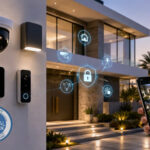
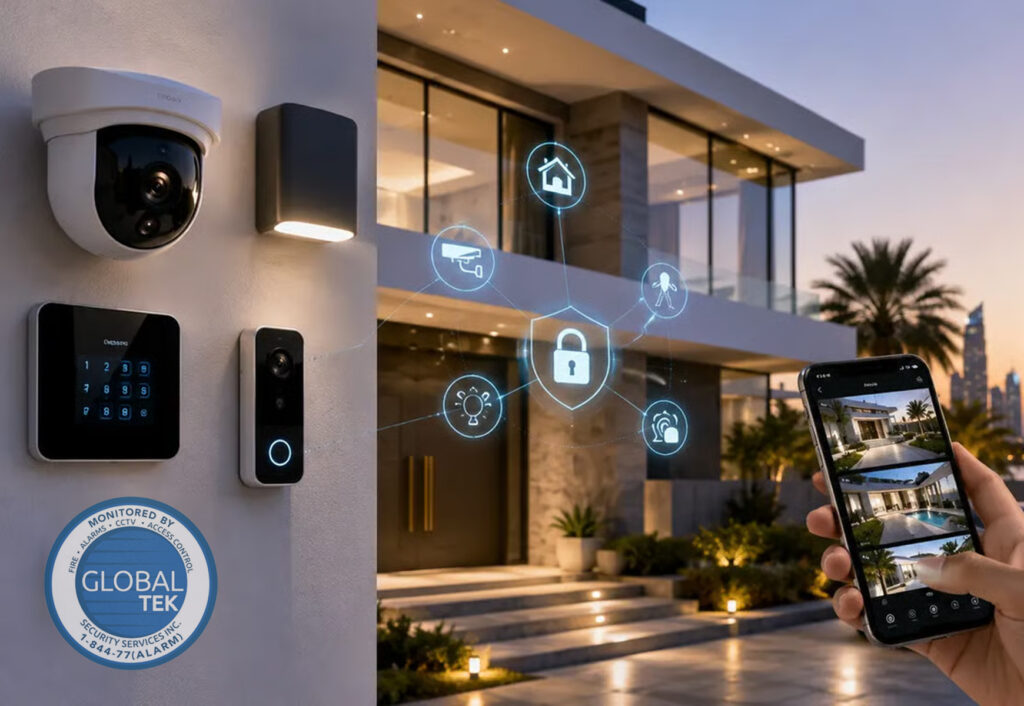
First, it helps to understand what you are buying, because “security system” means something very different today than it did even five years ago. A professionally designed home security system in 2026 typically combines:
- Monitored door, window, and motion sensors connected to a 24/7 central station
- HD security cameras with night vision, motion detection, and smartphone viewing
- Monitored smoke detectors and carbon monoxide detectors
- Environmental protection such as flood sensors and low-temperature devices
- Smart home automation for locks, lighting, and thermostats, controlled from one app
In other words, you are not buying a burglar alarm. You are buying an always-on protection layer for the largest financial asset most families own, plus the people inside it.
The Real Cost of a Break-In
To judge whether protection is worth paying for, start with what it protects against. The direct losses from a residential break-in routinely run into the thousands of dollars once you add stolen electronics, jewelry, tools, cash, and the damage done to doors, frames, and windows during forced entry. Insurance may cover part of it, but deductibles, claim time, premium increases, and items that can never be replaced all land on you.
The indirect costs are heavier. Families who experience a break-in consistently report lingering anxiety, trouble sleeping, and a changed relationship with their own home. Children can be especially affected. When people say a burglary “took more than our belongings,” this is what they mean. Preventing one single incident can justify years of monitoring fees, and prevention is exactly what visible, monitored security does best, since intruders overwhelmingly prefer unprotected targets.
Fire and Environmental Protection Change the Math
If you evaluate a security system purely as burglary insurance, you are undercounting its value, because the same system stands guard against threats that are statistically more likely and more destructive than theft.
A monitored smoke detector alerts the central station even when the house is empty or everyone is asleep, so the fire department can be dispatched minutes earlier, and minutes are everything in a house fire. A monitored carbon monoxide detector can be the only warning a sleeping family ever gets. A ten-dollar-a-month flood sensor near the hot water tank can catch a leak on day one instead of week three. When one system covers intrusion, fire, carbon monoxide, flooding, and freezing pipes, the cost per protected risk drops dramatically.
Insurance Discounts Quietly Repay Part of the Cost
Most Canadian insurers discount home premiums for professionally monitored security, and many offer larger discounts when monitored fire detection is included. Depending on your insurer and coverage, the savings can offset a noticeable share of your monitoring fee every single month. Combined with sensible rate reduction options, the net monthly cost of real protection is often far lower than the sticker price suggests. It is worth a five-minute call to your insurance broker to find out exactly what your discount would be.
Where Systems Fail to Deliver Value
Honesty matters here: not every security purchase is a good one, and knowing the common failure points helps you avoid them.
- Unmonitored gear that only makes noise. A siren nobody responds to and a camera nobody watches provide evidence, not protection.
- Long-term contracts that lock you in for years regardless of service quality, often with steep cancellation penalties.
- One-size-fits-all packages that leave real vulnerabilities uncovered while billing you for features you never use.
- Hidden fees and surprise upsells that inflate the advertised price after installation.
- Complicated systems that frustrate the household until everyone simply stops arming them.
A system that is not armed, not monitored, or not designed for your actual property is money poorly spent no matter how cheap it was. This is why who installs and monitors your system matters as much as the equipment itself.
What Sets a Worthwhile System Apart in 2026
The value question ultimately comes down to response. When something happens, does anything happen? GlobalTek Security builds every system around rapid response dispatch: real-time alerts, immediate operator action, and in supported areas, patrol guards who can physically reach your property in remarkable time. One Niagara Region client woke to her alarm at 5:00 a.m. and found a uniformed guard already in her driveway, police already dispatched, and the intruder gone; he was apprehended within the hour. That is what “worth it” looks like in practice.
Just as important is what we leave out: no rigid packages, no hidden costs, and no long-term locked-in contracts. We assess your home, design protection that fits it, and keep agreements flexible so you stay because the service works.
How to Decide for Your Own Home
Ask yourself four questions. What would a break-in, fire, or flood actually cost my family, financially and emotionally? How quickly would anyone respond to an emergency at my home today if I were away or asleep? What discount would my insurer give me for monitored protection? And can I get a system tailored to my home without being locked into a contract I might regret?
For most Canadian homeowners in 2026, working through those questions leads to a clear conclusion: a properly designed, professionally monitored system is one of the highest-value protections you can put around your home, your finances, and your family’s peace of mind.
Frequently Asked Questions
How much does a home security system cost in 2026?
Costs vary with home size, equipment, and monitoring level, which is exactly why fixed packages so often fit poorly. A modest monitored setup for a typical home costs less per day than a cup of coffee, while larger properties with extensive cameras and automation invest more. Because GlobalTek designs to your actual needs rather than a sales target, you pay for coverage that matters and skip features that do not.
Do security systems still work during a power or internet outage?
Professionally installed systems include battery backup that keeps the panel and sensors running through an outage, and cellular communicators that reach the monitoring station without your home internet. Your protection does not go dark when the lights do.
What happens if I move or my needs change?
This is where flexible agreements prove their worth. Without a long-term locked-in contract, you can scale the system up, adjust monitoring, or make arrangements for a new property without penalty negotiations. Your security should adapt to your life, not the other way around.
Get an Honest Assessment, Not a Sales Pitch
GlobalTek Security has protected Canadian homes and businesses for more than 25 years, serving over 3,000 satisfied clients from our offices in Stoney Creek and Niagara Falls, Ontario. Every system we design is customized to your property, backed by rapid response dispatch, and offered with flexible agreements instead of long-term locked-in contracts. Call us today at +1-905-928-8564 or toll-free at +1-844-772-5276, or request a free quote online.
Securing you is all we do!